


Training Reimagined: Games, Kindness, and Real-Life Skills

This week marks Be Kind to Animals Week, a time dedicated to reflecting on our relationships with the animals who share our lives. At Loyal-T Dog Training, we believe that kindness isn't just about treats and belly rubs—it's about how we teach, communicate, and build trust with our dogs.
One of the most powerful ways to show kindness is through positive reinforcement and games-based training. This approach transforms training into a joyful, collaborative experience, fostering deeper bonds and mutual understanding.
We'll explore the science behind learning through play, drawing parallels between child development and canine training. We'll discuss how games-based methods not only make training more enjoyable but also enhance learning, reduce stress, and promote positive behaviors.
Join us as we uncover how play can be a profound expression of kindness, leading to happier, more confident dogs and stronger human-animal connections.
What Is Games-Based Dog Training?
Games-based dog training is exactly what it sounds like: using structured, purpose-driven play to teach essential life skills. Rooted in positive reinforcement, this method shifts the focus from commands and corrections to collaboration and choice.
Rather than drilling behaviors, we present dogs with fun, engaging challenges—games that teach focus, calmness, recall, and more. These games are built on key concepts, helping dogs understand why and when to use behaviors, not just what to do.
Core Features of Games-Based Training:

Positive reinforcement at its core: Rewards-based learning encourages confidence and motivation.
Choice-led: Dogs are empowered to make the right decision, rather than forced into obedience.
Concept-focused: We don’t just train a “sit”—we teach calmness, engagement, and adaptability through context-rich games.
Fun-first: A playful mindset creates a relaxed learning environment that enhances both human and canine enjoyment.
This approach stands in contrast to traditional methods, which often rely on correction, pressure, or compulsion. While old-school obedience might suppress behaviors, games-based training replaces unwanted behavior by building new, useful habits that meet the same need more constructively. By making learning fun, dogs don’t just obey—they participate.
The Science Behind Learning Through Play
Children and Play-Based Learning
In human education, play is recognized as essential for healthy development. Research from the American Academy of Pediatrics (Ginsburg, 2007) emphasizes that play is crucial for brain development, problem-solving skills, and emotional resilience.
Montessori and play therapy methods show how structured, meaningful play improves cognitive flexibility, focus, and self-control.
When children engage in games, they're not just having fun—they're learning concepts like cooperation, patience, emotional regulation, and decision-making naturally.
Play creates context, allowing children to experiment safely, learn from mistakes, and retain knowledge longer.
Dogs and Play-Based Learning
Scientific studies in dog training reflect similar findings:
A 2020 study in Frontiers in Psychology found that dogs trained through reward-based methods show higher engagement, lower stress, and stronger task retention than dogs trained through aversive methods.
Research has shown that play-based training improves a dog's emotional welfare, building confidence and optimism (Rooney & Cowan, 2011).
Dogs, like children, thrive when learning is dynamic, rewarding, and connected to real-life scenarios. Play transforms training from a rote exercise into an experience that builds both skill and resilience.
Why Games Work: The Pros of Learning Through Play
Games-based learning isn’t just fun — it's a powerhouse for building lasting, meaningful skills. Here's why:
1. Builds Real-Life Skills Naturally
Instead of drilling obedience, games create real-world reliability.
Teaching "sit" is one thing; teaching a dog to choose calmness around distractions through a game is life changing.
Recall, leash walking, impulse control — all these are built through strategic games that mimic real-life contexts.
2. Reinforces Contextual Learning
Dogs don’t just learn a behavior; they learn when and where to use it.
For example, a dog that learns through games knows that sitting politely works at the front door, in a busy park, or during a family BBQ.
Contextual learning creates flexible, adaptable behavior rather than rigid performance.
3. Strengthens the Human-Canine Bond

Play builds trust.
Positive interactions during training sessions lead to a stronger, more respectful relationship.
Dogs trained with games view their human as a source of fun, safety, and guidance — not fear or uncertainty.
4. Enhances Motivation and Engagement
Play taps into natural dog instincts like chasing, sniffing, and problem-solving.
A motivated dog is an eager learner.
Rather than resisting training, dogs look forward to sessions and try harder.
5. Fosters Emotional Resilience
Training through games teaches dogs how to handle frustration, recover from mistakes, and keep trying.
Emotional resilience is crucial for coping with stress, novel situations, and unexpected challenges.
Confident dogs are more capable of living happy, enriched lives
Play With Purpose: Core Concepts Built Through Games
Games-based training isn’t just about having fun — it’s a strategic way to build the conceptual skills that dogs need to thrive in everyday life. When we use games thoughtfully, we’re shaping how a dog thinks, feels, and responds to the world around them.
Here are the foundational concepts games help develop:
🧠 Focus and Engagement
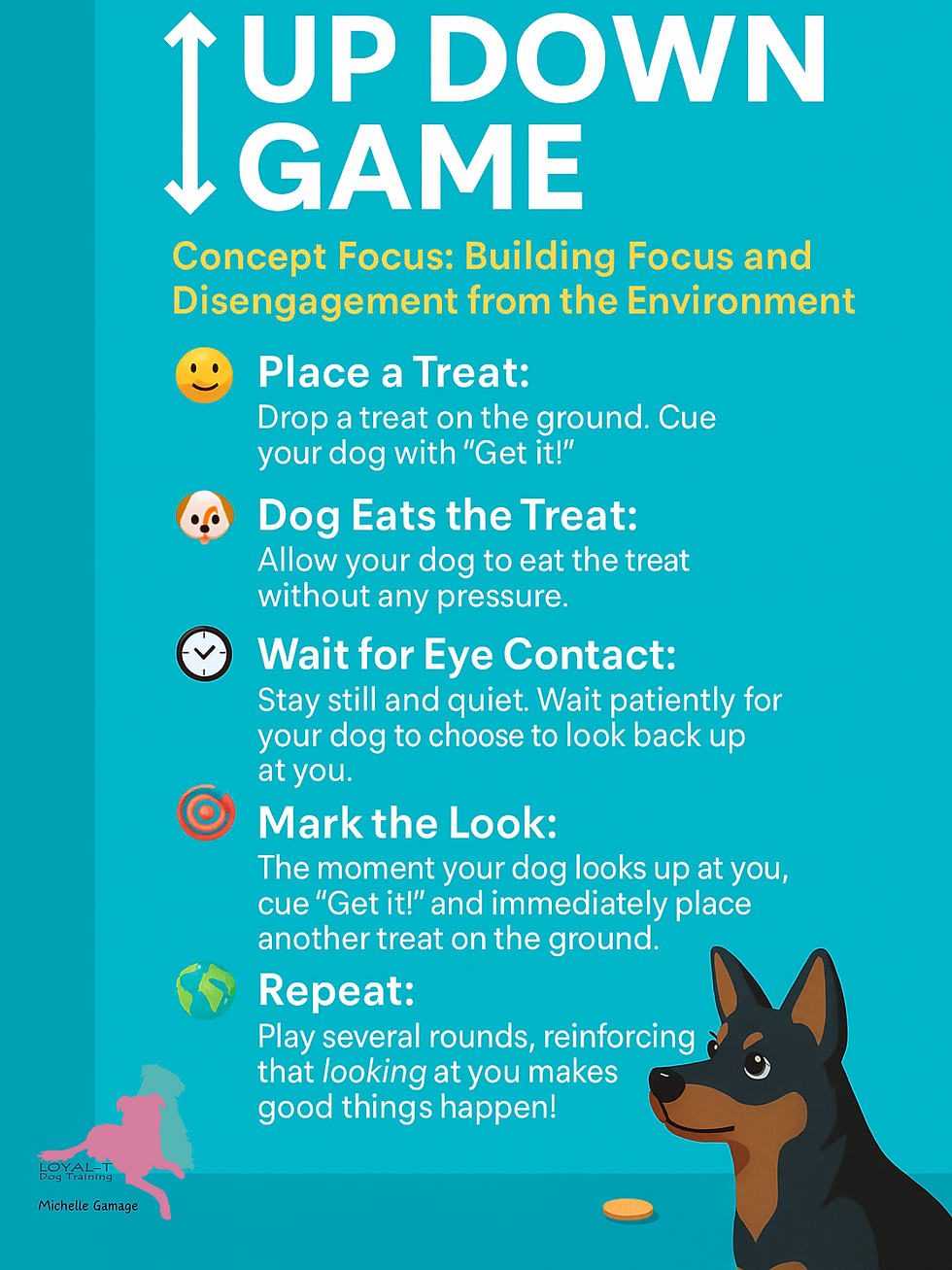
Games naturally teach dogs to choose their handler over distractions. Rather than forcing attention, we grow it through joyful interaction, making dogs eager to check in and stay connected.

🧘 Calmness and Impulse Control
Structured play helps dogs practice patience and self-regulation. By learning that calm behavior leads to rewards and access to fun, dogs develop better coping strategies for exciting or overwhelming environments.
🚀 Motivation and Drive
Well-designed games tap into a dog's natural instincts — chasing, sniffing, solving problems — and channel them into positive behaviors. A motivated dog wants to work with you, making training faster and more enjoyable.
🌎 Adaptability and Emotional Resilience
Games expose dogs to mini challenges that help them build confidence and flexibility. Dogs learn to recover from mistakes, try again, and remain optimistic even when things get tricky.
🧩 Problem-Solving and Decision-Making
Rather than simply obeying commands, games encourage dogs to think independently, make choices, and understand consequences. This cognitive engagement strengthens their ability to navigate real-world situations.
💖 Strengthened Bond and Communication
Play builds trust, joy, and clear two-way communication between human and dog. It turns training into a team sport, not a one-way street.
In short: When you play smart, you're not just teaching behaviors — you're shaping a thinking, resilient, connected companion ready for anything life throws their way.
How to Start: Kindness in Action
Kindness isn’t just about what we feel—it’s about what we do. Choosing games-based, positive reinforcement training is a daily commitment to building a better life for your dog through patience, empathy, and fun.
Here’s how to put this into action starting today:
🎯 1. Choose Connection Over Control
Focus on building a relationship, not just getting obedience. Play games that encourage your dog to want to work with you, not because they have to, but because they choose to.
🧩 2. Pick One Concept to Grow
Decide what life skill would benefit your dog most right now—calmness, focus, flexibility—and start playing games that target that specific concept.
Tip: One concept at a time keeps training focused, achievable, and motivating for both of you.
📅 3. Keep It Short and Sweet
Training sessions don’t need to be long to be effective. Even 3–5 minutes of fun, high-energy play can plant seeds for lasting change.
Think: "quality over quantity."
🐾 4. Celebrate Progress, Not Perfection
Games teach dogs how to learn, and mistakes are part of that journey. Each small win—each thoughtful choice, each extra second of calm—is a moment to celebrate. Kindness means cheering them on, even when progress feels slow.
💡 5. Make It a Habit
The more often you weave games into daily life, the faster you'll see transformation. Training becomes a way of living—not a separate, stressful task.
Kindness That Lasts a Lifetime
Training isn’t just about teaching behaviors — it’s about shaping a relationship built on trust, understanding, and joy. By choosing positive reinforcement and games-based learning, you’re not just being kind for a week—you’re creating a lifetime of kindness for your dog.
Games transform training from a chore into a shared language of connection. They teach dogs how to think, how to choose, and how to thrive—all while having fun.
This Be Kind to Animals Week, let's commit to more than just treats and pats. Let’s commit to teaching through play, celebrating effort, and building resilient, happy companions who know they are loved, respected, and understood.
Because at Loyal-T Dog Training, we believe: Training for Fun, Skills for Life. 🎉🐾
👉 Try a concept game with your dog this week.
👉 Celebrate every small win.
👉 Share your experience with us on Facebook or Instagram and inspire others to choose kindness through play!


Comments