


Training for the Real World: 5 Essential Skills Every Dog Needs

Dog training shouldn’t stay stuck in the backyard. The real test of a dog’s skills is how well they can navigate the unpredictable, everyday world we live in—think crowded sidewalks, picnic parks, vet visits, and doorstep deliveries.
That’s what real-world training is all about: preparing dogs to confidently handle life’s curveballs while staying connected with their humans. It’s not about perfection or performing for an audience—it’s about developing practical, life-enriching behaviors that make daily living safer and more enjoyable for everyone.
In this post, we’re highlighting five core skills that form the foundation of a well-adjusted, responsive dog. These aren’t flashy tricks or one-size-fits-all commands. They’re adaptable, evidence-based behaviors that can be built into your everyday routines using positive reinforcement and a solid understanding of your dog’s needs.
Whether you’re just starting your training journey or refining existing skills, this guide offers a practical, compassionate framework for helping your dog thrive in the real world.
Let’s take a look at the five essentials.
1. Self-Control: The Foundation of All Good Behavior
If there’s one skill that underpins almost every good decision a dog makes, it’s self-control. From resisting the urge to bolt through an open door to calmly waiting while you prep their dinner, self-control—or impulse regulation—isn’t just polite, it’s lifesaving
In the real world, dogs are constantly bombarded with temptations: food on the ground, flapping birds, fast-moving bicycles. Self-control allows them to pause before reacting—to think, not just act. It’s the difference between a dog who can navigate a busy sidewalk with ease and one who turns a stroll into a chaotic tug-of-war.
But here’s what’s especially important: self-control isn’t something a dog either “has” or “doesn’t have.” It’s a skill, and like any skill, it requires time, repetition, and support to develop. Science backs this up—dogs, like humans, experience self-control as a limited resource. After exerting a lot of effort to resist temptation, their ability to do it again diminishes unless they've had a chance to rest or refocus. (source)
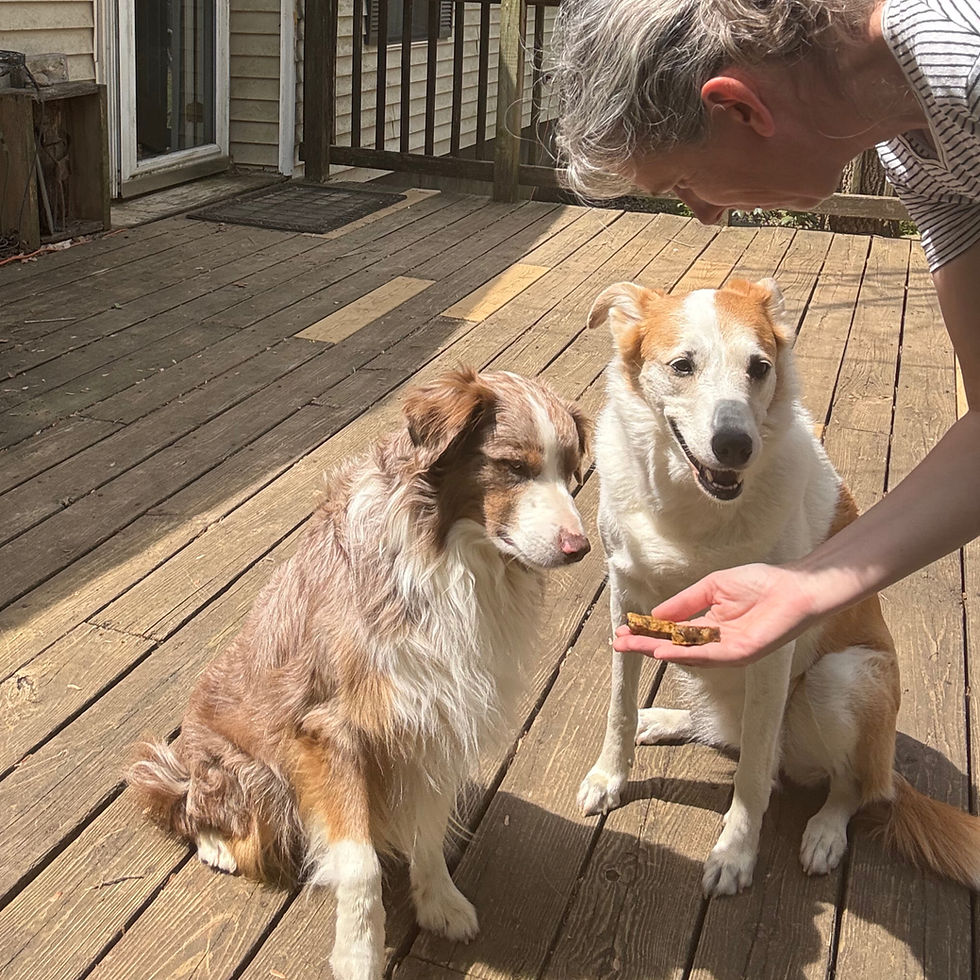
This matters because so much of what we label as “bad behavior” is actually a dog’s self-control being pushed past its limit. Barking, lunging, jumping—these are often signs of overstimulation or stress, not disobedience. By understanding the role self-control plays, we can set our dogs up for success through clear expectations, structured environments, and consistent, compassionate feedback.
In the real world, a dog with self-control isn’t just better behaved—they’re safer, more adaptable, and more in tune with the human world they live in.
2. Focus on You: Building an Attention Magnet
In a world full of distractions—bicycles, squirrels, pizza crusts on the sidewalk—your dog’s ability to focus on you is one of the most valuable real-life skills they can develop. Focus isn’t about dominance or obedience; it’s about connection. It’s your dog saying, “I see what’s going on around me, but I’m still choosing to check in with you.”
In practice, this means your dog can look to you for guidance instead of getting swept away by the environment. It’s not just useful during walks or training—it’s critical for navigating busy streets, new situations, or moments when their instincts say “go!” and you need them to stay.

Focus is the glue that holds your communication together. Without it, even the most well-trained cues get lost in the noise. Studies have shown that dogs trained with reward-based methods tend to offer more voluntary attention to their handlers, which in turn improves learning, retention, and trust.
This mutual attention also lowers stress—for both dog and human. A dog who knows how to check in with their person feels safer, and a person who sees that check-in gains confidence in their dog’s responsiveness. It’s a feedback loop that strengthens the human-canine bond.
Focus is not a fixed trait—it’s a skill. One that’s built through relationship, not repetition. And in the real world, it becomes the dog’s compass, helping them navigate the unpredictable with a steady, familiar guide: you.
3. The Power to Disengage: Looking Away from Chaos
One of the most overlooked—and underrated—real-world skills is the ability to disengage. It’s what happens when a dog notices something exciting or stressful—a barking dog across the street, a jogger, a pizza box—and instead of reacting or fixating, they choose to look away. They make the decision to shift their focus, to let it go.
That’s a big deal.
Disengagement isn’t avoidance, and it’s not suppression. It’s choice. It shows that the dog has developed the emotional flexibility to assess a situation and turn their attention back to something more rewarding—often, their person.

Disengagement is especially important for reactive, fearful, or highly excitable dogs. Many behavioral issues stem not from the initial noticing of a trigger, but from the dog’s inability to break their focus once they’re locked in. Teaching dogs to disengage creates space for recovery, calm thinking, and better behavior choices.
Research-based techniques like the Engage-Disengage Game help dogs learn this skill safely and positively. They teach dogs that it’s okay to notice the world—and even better to reorient back to their handler. Over time, this rewires how dogs perceive and respond to their environment.
Disengagement builds confidence. It tells your dog, “You don’t have to react to everything—you can notice, then move on.” And that’s a superpower in our overstimulating human world.
4. Staying on Task: Finishing What We Start
In a world full of instant gratification and ever-changing stimuli, sticking with a task is no small feat—especially for a dog. But the ability to stay engaged, even when distractions show up, is a skill that makes daily life smoother and training more effective.
“Staying on task” doesn’t mean rigid obedience. It means your dog can remain involved in an activity—whether it’s walking nicely beside you, maintaining a down-stay during a coffee stop, or continuing a recall through distractions—without constantly checking out or giving up.
Persistence builds reliability. It allows dogs to follow through on learned behaviors in real-life situations, not just quiet training spaces. When a dog can stay engaged with a cue or a routine, they’re more likely to complete tasks successfully—even when the environment changes halfway through.

This skill is also closely tied to confidence. A dog who understands that sticking with a task leads to reward and resolution is less likely to become frustrated, anxious, or avoidant. They learn that effort pays off, and that their human partner is a consistent part of the process.
Research shows that shorter, spaced-out training sessions are more effective than long, frequent ones, especially for task retention. That’s because real learning happens between sessions—during rest, reflection, and repetition.
In real-world terms, staying on task means your dog doesn’t give up the moment something more exciting appears. It’s the skill that keeps them grounded and goal-oriented, even in the middle of life’s chaos.
5. Taking Reinforcement: The Art of Saying “Yes, Please!”
At first glance, “taking reinforcement” might seem like a given. After all, what dog doesn’t want a treat? But in practice, the ability to calmly and consistently accept reinforcement from a human is a skill in itself—especially in real-world settings where stress, distractions, or overstimulation can get in the way.
Reinforcement isn’t just about handing over food or toys. It’s about communication. When your dog can take a reward from you—whether it’s a treat, praise, or a quick play break—they’re saying, “I’m here, I’m engaged, and I’m ready to learn.”
In high-stakes moments (think: vet visits, crowded markets, noisy sidewalks), many dogs become too overwhelmed to eat or respond to praise. That’s not because they’re stubborn—it’s often a sign they’re over their emotional threshold. In those moments, if a dog can take reinforcement, it means they’re still reachable. It means you still have a way to communicate, to reassure, and to shape behavior.

Reinforcement also builds your training "bank account." Every successful repetition, every small win, deposits value into the relationship. Over time, that value turns into trust—and that trust becomes your most powerful training tool.
Research supports what positive trainers have long known: the more a behavior is reinforced, the more likely it is to be repeated. But for reinforcement to work, the dog must be able—and willing—to receive it.
In the real world, reinforcement isn’t just a training tool. It’s a lifeline. And teaching your dog to recognize and respond to it—anywhere, anytime—is one of the most empowering skills you can offer them.
Let’s rewind to that earlier scene: you and your dog are walking through a busy park. A jogger passes by. A child drops a sandwich. A loud motorcycle rumbles in the distance.
Here’s what real-world training looks like in that moment:
Self-control kicks in as your dog resists the urge to lunge at the sandwich.
Focus on you helps them check in instead of chasing the jogger.
Disengagement allows them to notice the motorcycle, then look away.
Task persistence keeps them walking politely, even when the path gets chaotic.
Taking reinforcement means they can accept praise or a treat for making good choices—even with all that going on.
These five skills aren’t about perfection or performance. They’re about helping your dog feel capable and connected—in any situation.
Training for the real-world means working with your dog, not against them. It means teaching them how to think, not just what to do. And it means building a life together based on communication, trust, and mutual respect.
So, take a moment to reflect: Which of these skills is your dog already rocking? Which one could use a little extra support?
You don’t have to train everything at once. Choose one skill to focus on this week. Keep it short, keep it fun, and remember—progress is always worth celebrating.
Because at the end of the day, training for fun truly leads to skills for life.


Comments